English
 русский
 Italiano
 Türkçe
 Deutsch
 اردو
اردو
There is a moment that comes after every trip to Egypt—a quiet, almost uncomfortable realization that doesn’t happen at the airport, nor during the last day at the hotel, but later… when everything settles.
It arrives without warning.
A thought. A comparison. A question that lingers longer than expected:
“Did I really experience Egypt… or did I just pass through it?”
Because Egypt, unlike most destinations, does not reveal itself easily, nor does it offer its depth to those who remain on the surface; it requires movement, curiosity, and a willingness to step beyond comfort, beyond routine, beyond the predictable rhythm of resort life.
And that is precisely where many travelers fall into the same quiet mistake.
They come for the beauty…
but leave without discovering the truth behind it.
It often begins innocently.
A beautiful resort in Sharm El Sheikh, a private beach, a perfectly arranged day that requires no decisions, no effort, no deviation from ease.
And for a moment, it feels enough.
But Egypt is not designed to be consumed from a sunbed.
Because the country itself exists in layers—each one more profound than the last—and those layers do not reach you; you must reach them.
Travelers who remain within the boundaries of their hotels rarely realize what they’ve missed until it is too late, because comfort, while seductive, has a quiet cost:
It replaces discovery with routine.
And Egypt was never meant to be routine.
There is a particular kind of regret reserved for those who leave Egypt without seeing Cairo, not because they didn’t have the chance, but because they underestimated its importance.
Cairo is not simply a destination among others; it is the axis around which the entire idea of Egypt revolves, the place where history is not displayed but exists, where time is not referenced but felt.
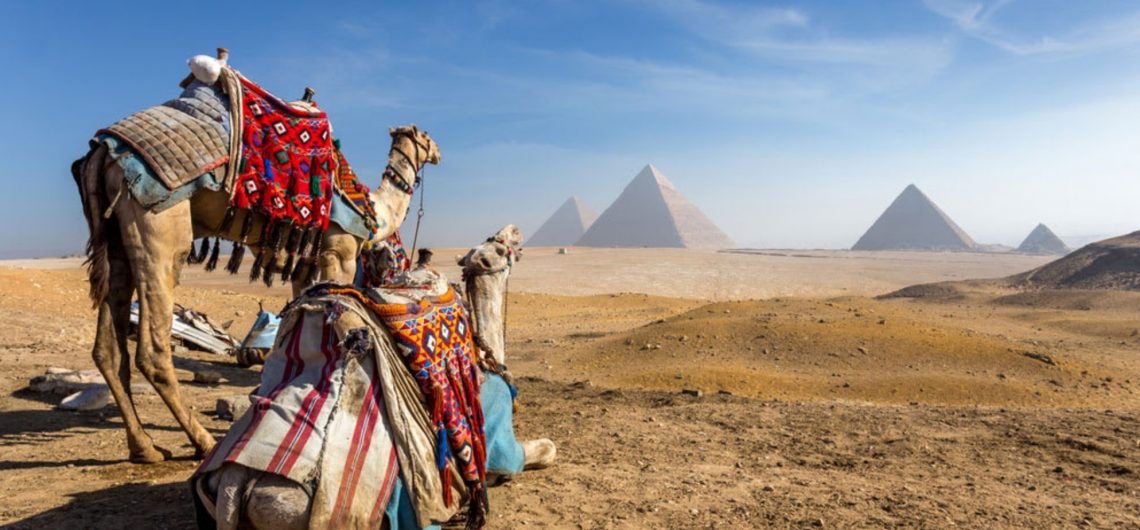
To stand before the Pyramids is not to check off a landmark—it is to confront scale, permanence, and human ambition in its purest form, to realize that what you are looking at has outlived empires, civilizations, and centuries of change.
And yet, many travelers convince themselves that it can wait.
That perhaps the next trip will include it.
That one experience is enough.
Until they leave—and understand, with a clarity that comes too late—that they have bypassed the very essence of the country they came to see.
If Cairo represents the beginning of the narrative, then Luxor is its expansion, its richness, its overwhelming proof that Egypt’s history is not isolated, but continuous and vast.
And yet, Luxor is often the destination people postpone, misunderstand, or simply fail to prioritize.
Not because it lacks value—
but because its value is not immediately obvious to the untrained traveler.
Luxor does not offer a single iconic image.
It offers immersion.
A landscape where temples rise from the earth with unapologetic grandeur, where tombs carved into mountains hold stories that were never meant to fade, where history is not framed behind glass but surrounds you entirely.
To miss Luxor is not to skip a location.
It is to leave the story unfinished.
The Red Sea is, without exaggeration, one of the most extraordinary marine environments in the world, yet it is also one of the most misunderstood.
Because many travelers believe they have experienced it simply by entering the water.
They swim.
They relax.
They observe the surface.
And they leave convinced they have seen it.
But the truth is far more complex.
The real Red Sea exists below—within coral formations that stretch like living architecture, within ecosystems that operate in silent, intricate harmony, within colors and movements that cannot be replicated elsewhere.
Experiences such as Ras Mohammed or White Island are not luxuries.
They are access points.
Without them, what you see is only a fraction of what exists.
And that fraction, while beautiful, is incomplete.
There is a third dimension to Egypt that many travelers never touch—not because it is hidden, but because it is underestimated.
Endless, silent, and profoundly grounding, it offers something that neither the sea nor the city can provide: perspective.
Places like the Colored Canyon or Dahab are not simply excursions; they are shifts in environment, in rhythm, in awareness.
Here, the noise disappears.
The scale changes.
The mind slows.
And for many, this becomes one of the most memorable parts of their journey—if they allow themselves to experience it.
Those who skip it rarely understand what they missed.
But those who go… never forget it.
What is striking about these regrets is that they rarely come from major mistakes.
They come from small decisions:
Choosing rest over exploration.
Postponing what feels “optional.”
Assuming there will always be another chance.
And individually, these decisions feel harmless.
But together, they shape the entire outcome of the trip.
Because Egypt does not overwhelm you with urgency.
It allows you to choose.
And in that freedom, it quietly reveals—or withholds—its depth.
At the core of all these reflections lies a simple distinction:
There are those who visit Egypt…
and those who experience it.
The difference is not measured in days, nor in budget, nor even in distance.
It is measured in intention.
In the decision to go beyond what is easy, to seek what is meaningful, to understand rather than simply observe.
And this is where structure becomes essential.
Because without the right planning, the right timing, and the right guidance, even the most curious traveler can miss what matters most.
This is precisely why the role of a professional travel company is not a luxury, but a necessity for those who wish to experience Egypt fully.
With Yalla Sharm, the journey is not left to chance.
Time is optimized with precision, ensuring that every moment contributes to the overall experience rather than being lost in logistics or uncertainty.
Comfort is maintained without sacrificing depth, allowing travelers to move between destinations seamlessly, without the friction that often diminishes the quality of the journey.
Pricing is transparent and structured in a way that reflects value rather than compromise, eliminating the hidden costs that often arise from unplanned decisions.
But most importantly, the experience itself is curated—not as a sequence of locations, but as a coherent narrative, where each destination adds meaning to the next.
Egypt does not demand your attention.
It earns it.
Quietly. Gradually. Completely.
And those who allow themselves to move beyond the surface, to explore its layers, to engage with its contrasts, leave with something far more valuable than photographs or memories.
They leave with understanding.
So the real question is not whether Egypt is worth visiting.
It is not even whether it is beautiful, or safe, or accessible.
The real question is far simpler—and far more honest:
Will you experience it… or will you leave wondering what you missed? ✨
Worried About Seasickness on a Red Sea Boat Trip? Here's What You Need to Know 🌊 You've booked your holiday in Sharm El Sheikh. The Red...
Read MoreCan You Enjoy Sharm El Sheikh If You Can't Swim? Absolutely — Here's How! 🌊 Imagine arriving in Sharm El Sheikh. The Red Sea is i...
Read MoreCan You Travel Egypt Without a Tour? Independent vs Organized Travel 🇪🇬 Do you need a tour to travel around Egypt? The short answer is: No....
Read MoreEgyptian Hospitality: Why Visitors Are Often Treated Like Guests 🇪🇬🤍 You may come to Egypt expecting the Pyramids. The Nile. Ancient temples...
Read More24/7