English
 русский (Russian)
 Italiano
 Türkçe
 Deutsch
 اردو

You've seen the photographs.
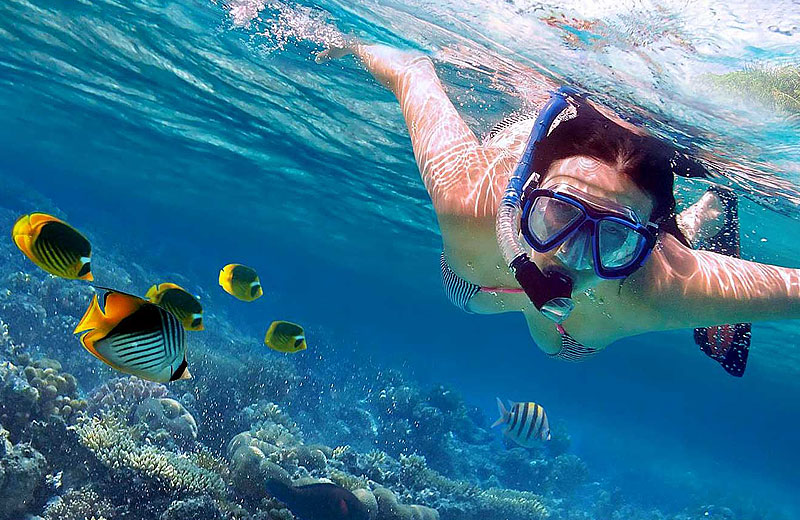
Divers floating effortlessly above coral reefs. Brilliantly colored fish swimming through impossibly blue water. A world that looks almost too beautiful to be real.
And somewhere inside you, there's a little voice saying:
“I'd love to try that.”
Then another voice interrupts.
What if I can't breathe properly? What if I panic? What if it's too deep?
If you're considering your first time scuba diving in Sharm El Sheikh, these questions might feel bigger than the excitement itself.
But here's something worth knowing.
You don't have to arrive feeling fearless. You need to understand what the experience involves, be medically fit to dive, and learn under appropriate professional supervision.
Let's explore what really happens when you take that first breath beneath the Red Sea.
Most people spend their entire lives breathing above water.
So the idea of descending beneath the surface with a tank on your back can feel wonderfully exciting—and completely unnatural.
Perhaps you're worried about the equipment.
Maybe you dislike deep water.
Or you're imagining yourself suddenly wanting to return to the surface.
Fear of scuba diving often comes from not knowing what to expect.
Understanding the process can reduce some of that uncertainty.
But nervousness deserves attention, not dismissal. If you're too anxious to follow instructions calmly, postponing the dive may be the safest decision.
Your first experience should never become a competition to prove how brave you are.
Yes. You don't necessarily need a diving certificate to experience scuba diving for the first time.
Introductory programs, including PADI Discover Scuba Diving, are designed to introduce eligible beginners to underwater breathing and basic diving skills under direct professional supervision.
These experiences are different from certification courses.
You learn essential procedures and practice skills appropriate to the program, but you don't become a certified independent diver afterward.
That's an important distinction.
Introductory diving in Sharm El Sheikh can help you discover whether scuba diving is something you'd like to pursue further.
And if you love the experience, you can explore formal training later.
The adventure begins long before you descend underwater.
First comes preparation.
Before participating, you'll need to complete the required medical screening.
Depending on your answers and circumstances, you may need clearance from a physician.
Your instructor will explain important safety rules, including how to breathe, communicate underwater, and respond to problems.
Listen carefully.
This isn't a formality to get through before the exciting part.
It's what helps you understand the experience you're about to have.
You'll be introduced to the mask, fins, air cylinder, regulator, and buoyancy equipment.
The regulator is the device that delivers breathing gas from your cylinder.
It may look complicated initially, but your instructor will explain its purpose and how to use it.
You'll also learn underwater hand signals.
Because once you're beneath the surface, talking isn't an option.
Depending on the program, you'll practice essential skills in a pool or suitable shallow, confined water.
This is your opportunity to become familiar with the equipment and demonstrate that you can perform the required skills.
You should never feel rushed into deeper water before you're ready or before the instructor has confirmed you meet the requirements.
Imagine the moment.
You're in the water, your instructor is nearby, and the regulator is in your mouth.
You take a breath.
Air flows through the equipment.
You exhale.
A stream of bubbles rises toward the surface.
And suddenly, something that seemed impossible becomes real.
You're breathing underwater.
It might feel unusual at first.
The sound of your breathing is more noticeable. Your movements feel different. The equipment may take a little getting used to.
Your instructor will help you become comfortable with the process before proceeding.
Then comes the scenery.
Sunlight filtering through the water.
A coral formation appearing ahead.
Tiny fish moving between rocks.
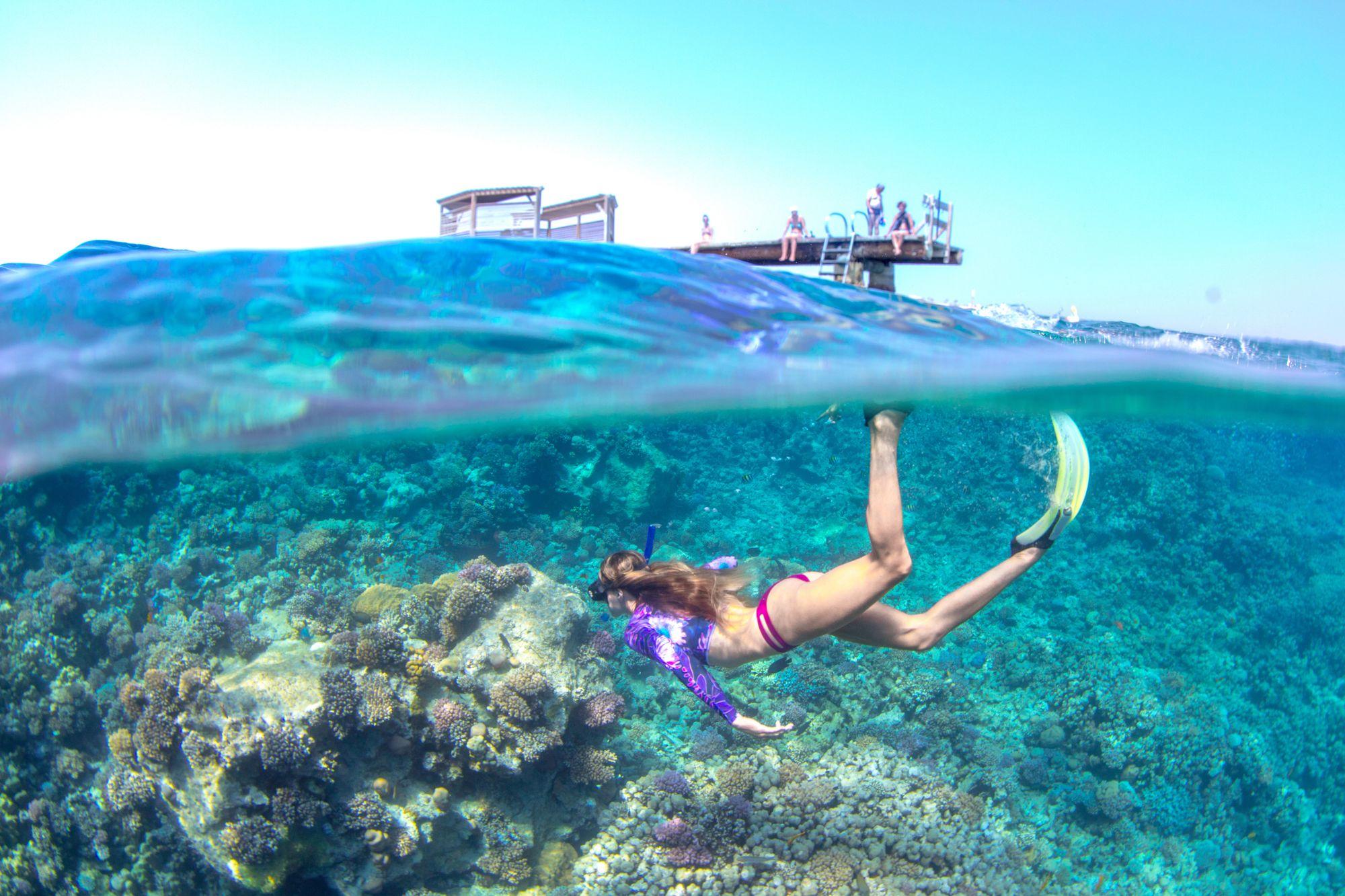
The Red Sea reveals itself from an entirely different perspective.
You don't need to rush toward anything.
Sometimes, simply hovering quietly and observing is the most extraordinary part.
This is one of the most important questions a nervous beginner can ask.
You are allowed to stop the experience.
Tell your instructor about your fears before entering the water.
If you become uncomfortable underwater, use the hand signals you've learned and follow your instructor's directions.
Never remove your breathing equipment impulsively or rush toward the surface.
A rapid, uncontrolled ascent can be dangerous.
Your instructor is responsible for managing the situation according to safe diving procedures.
And remember: you don't have to complete a dive simply because you've paid for it.
Feeling safe and able to follow instructions matters more than finishing the activity.
Probably not as deep as you're imagining.
Introductory programs have specific depth limits, and the actual depth depends on the program, participant, training environment, and conditions.
For example, PADI Discover Scuba Diving open-water experiences may reach a maximum of 12 meters when the applicable training and supervision requirements are met.
But that doesn't mean every beginner will descend to 12 meters.
Yalla Sharm's shore-based introductory diving excursion, for instance, advertises a dive reaching up to 8 meters.
The appropriate depth is determined by the instructor within the program's limits.
And here's something reassuring:
The beauty of the Red Sea doesn't begin at a particular depth.
You can discover fascinating marine life in relatively shallow water.
Your first diving experience doesn't have to begin with a boat journey.
Sharm El Sheikh offers different approaches, depending on the excursion and dive location.
For some beginners, entering the water from an approved shore location feels more manageable.
You may prefer beginning near the coastline rather than entering directly from a boat.
Shore diving can also appeal to travelers who experience seasickness.
However, shore entry isn't automatically easier or safer.
Conditions, underwater terrain, and access arrangements vary.
Boat excursions may provide access to offshore diving locations and combine the experience with time at sea.
For some travelers, this feels like the ultimate Red Sea adventure.
Others may find the boat journey or water entry more intimidating.
Neither option is universally better.
Choose according to your comfort, medical suitability, the operator's assessment, and the conditions on the day.
Scuba diving affects your body differently from ordinary swimming.
Pressure changes are particularly important for your ears, sinuses, and lungs.
Some medical conditions or medications require assessment before participating.
These may include certain heart or lung conditions, asthma, previous ear problems, significant anxiety-related conditions, or a history of difficulty equalizing pressure.
If you have a cold, blocked sinuses, or ear discomfort, don't simply assume you'll be fine underwater.
Never force an equalization attempt or continue descending through ear pain.
Tell your instructor and stop the descent if you cannot equalize comfortably.
Pregnant travelers, or those who may be pregnant, should not scuba dive.
If you're uncertain about your fitness, seek advice from a physician knowledgeable about diving medicine.
Being on holiday doesn't make medical precautions less important.
One of the advantages of visiting Sharm El Sheikh is having different ways to discover the underwater world.
With Yalla Sharm, beginners can explore experiences such as Intro Diving From the Shore and PADI Discover Scuba Diving.
The shore-based introductory excursion offers an instructor-led dive with equipment included, while the Discover Scuba Diving program introduces beginners to the fundamentals of scuba diving.
Before booking, ask about the medical questionnaire, swimming requirements, instructor supervision, planned depth, and what's included.
You should also confirm any age restrictions and whether the specific experience suits your abilities.
And if you're still deciding between staying at the surface and exploring underwater, our guide Snorkeling vs Diving in Sharm El Sheikh: Which Experience Is Right for You? can help you compare the options.
The right experience isn't necessarily the deepest or most adventurous.
It's the one you're genuinely prepared to enjoy.
Yes. Certain introductory diving programs are designed for eligible people without previous scuba experience. Medical screening, appropriate training, and direct professional supervision are essential.
Possibly, depending on your comfort and ability to follow instructions calmly. Discuss your concerns with the instructor beforehand. If your fear prevents safe participation, don't force yourself to dive.
You breathe through a regulator connected to your scuba equipment. The sensation may feel unfamiliar initially. Follow your instructor's training and remember never to hold your breath while scuba diving.
Depth depends on the program and conditions. Some introductory programs allow dives up to 12 meters under specified requirements, while individual excursions may have shallower limits.
Swimming and water-comfort requirements depend on the specific introductory program and operator. Some experiences require swimming ability. Always confirm the requirements honestly before booking.
No. You need an appropriate surface interval before flying because of decompression illness risk. Ask your dive professional about the recommended waiting period for your specific dive profile and travel plans.
Imagine returning to your hotel after your first dive.
Your hair is still damp.
Your mind is full of colors you didn't know existed.
And you keep remembering that first moment when you looked around underwater and realized just how different the world could be.
Perhaps you'll fall in love with diving.
Perhaps you'll decide once was enough.
Or perhaps you'll choose not to enter the water at all.
Every one of those outcomes is valid.
Because the real purpose of your first scuba diving experience isn't to conquer the ocean or prove you're fearless.
It's to discover something new while respecting your own limits.
And sometimes, the most unforgettable adventure begins not when fear disappears—but when understanding gives you the confidence to make the right choice. 💙🤿
Your First Snorkeling Trip in Sharm El Sheikh: What Really Happens? 🐠 You're standing on the deck of a boat in Sharm El Sheikh. The Red Sea...
Read MorePreoccupato per il mal di mare durante un'escursione in barca sul Mar Rosso? Ecco cosa devi sapere 🌊 Hai prenotato la tua vacanza a Sharm El S...
Read MorePuoi Goderti Sharm El Sheikh Se Non Sai Nuotare? Assolutamente Sì — Ecco Come! 🌊 Immagina di arrivare a Sharm El Sheikh. Il Mar Ro...
Read MorePuoi Viaggiare in Egitto Senza un Tour? Viaggio Indipendente vs Organizzato 🇪🇬 Hai bisogno di un tour per viaggiare in Egitto? La risposta breve...
Read More24/7