English
 русский
 Italiano
 Türkçe
 Deutsch
 اردو
اردو
Scroll for ten seconds and you’ll see it.
An endless stream of flawless sunsets, empty beaches, perfectly framed breakfasts, and couples who somehow always arrive at the exact right moment—never early, never late, never tired, never lost. ✨📸
Travel, as presented on social media, has become less about movement and discovery, and more about curation—a carefully edited version of reality where imperfections are removed, complexity is simplified, and entire destinations are reduced to a handful of photogenic angles.
And while there is nothing inherently wrong with beauty, there is something deeply misleading about selective truth.
Because the reality of travel—the part that stays with you long after the photos fade—is rarely the one that trends.
What you see online is not false.
But it is incomplete.
A beach in the Maldives can indeed look like a dream—still, silent, endless—but what you don’t see is the rhythm of repetition that follows, where the same view, however beautiful, begins to feel familiar faster than expected.
Dubai can deliver a level of polish and luxury that few cities rival—but what often remains outside the frame is the sense of uniformity, where experiences, though impressive, can begin to feel interchangeable.
Europe, with its historical charm and architectural beauty, continues to captivate millions—but the images rarely show the density, the queues, the pressure of navigating spaces designed for another era but filled with modern crowds.
None of this invalidates those destinations.
It simply reveals a truth that social media rarely prioritizes:
A destination is not defined by its best moment. It is defined by its full experience.
One of the most subtle shifts in modern travel is the transition from experiencing a place to performing it.
Travelers arrive with pre-constructed expectations:
The exact photo they want to take
The exact angle they want to recreate
The exact mood they believe they should feel
And when reality does not align perfectly with that expectation, disappointment quietly sets in—not because the destination failed, but because the expectation was never grounded in reality to begin with.
This is where Egypt enters the conversation in a completely different way.
Egypt does not attempt to be flawless.
It does not offer silence where life exists, nor emptiness where history has accumulated for thousands of years.
Instead, it offers something far more valuable:
Authenticity.
Yes, Egypt can be dynamic.
Yes, it can be intense at times.
Yes, it is alive in a way that cannot be filtered into simplicity.
But within that energy lies its greatest strength.
Because Egypt is not a destination you observe from a distance.
It is one you engage with.
Online, the Red Sea appears as a perfect gradient of blue.
In reality, it is far more than that.
It is movement, depth, and life—coral reefs that stretch beneath the surface like entire cities, ecosystems that shift with every current, and a clarity that reveals a world most travelers have never truly seen.
This is not a background.
It is an experience.
Images of Cairo often focus on monuments.
But Cairo itself is not static.
It is layered, complex, and constantly moving—where ancient structures exist within a modern rhythm that refuses to slow down.
You do not simply visit Cairo.
You navigate it, absorb it, and eventually understand it.
And that understanding becomes one of the most valuable parts of the journey.
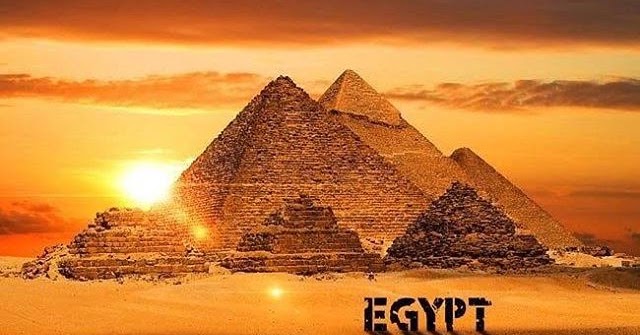
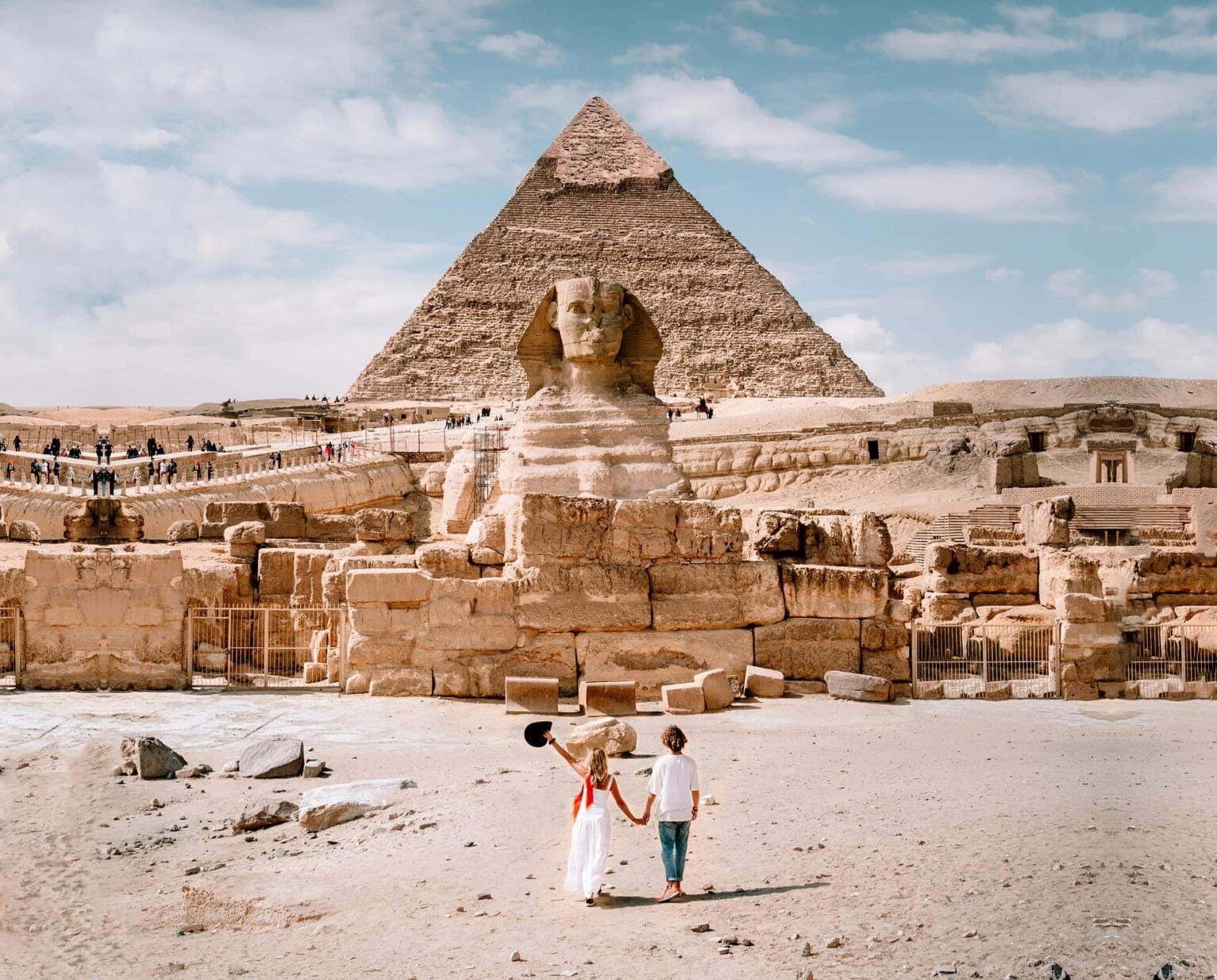
Photographs of the Pyramids capture scale.
But they cannot capture presence.
Standing in front of them is not a visual experience—it is a psychological one, where time collapses and perspective shifts.
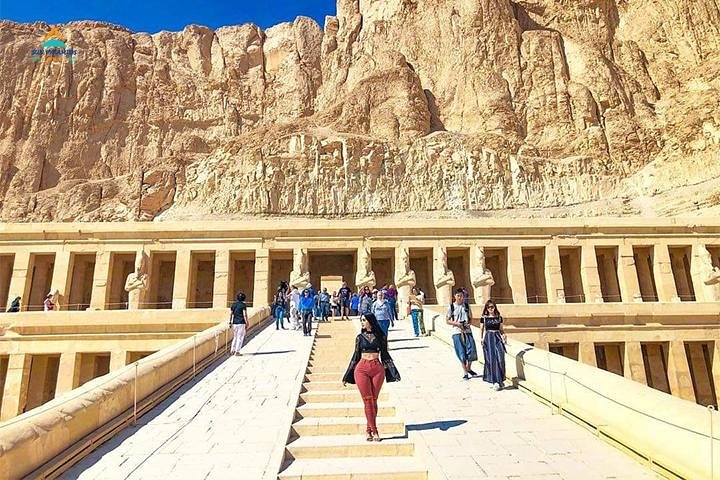
The same applies to Luxor, where temples and tombs do not feel like exhibits, but like environments that still hold the weight of their original purpose.
This is not curated history.
This is living history.
Rarely does social media capture the silence of the desert.
The absence of noise.
The clarity of space.
The way time slows without distraction.
Places like the Sinai desert or the Colored Canyon offer something that cannot be staged or edited.
They offer stillness.
And in a world built on constant stimulation, stillness is rare.
Most destinations offer a single dominant experience.
Relaxation
Luxury
Culture
Egypt offers all of them—sometimes within the same day.
You can begin with the sea, move into history, transition into desert landscapes, and end your evening in a setting that reflects modern life and global culture.
This is not variety for the sake of variety.
It is contrast that creates depth.
And depth is what makes a destination unforgettable.
Social media captures moments.
Travel creates continuity.
A photograph can show you where someone stood.
It cannot show you how they felt when they got there, what they experienced along the way, or how the destination changed them—even slightly.
Egypt, more than most places, exists in that gap.
Between what is seen…
and what is felt.
This is where many travelers either succeed—or quietly fall back into the same pattern social media created for them.
Because even in a destination as rich as Egypt, it is still possible to experience only a fraction of what exists.
Not because of lack of opportunity.
But because of lack of structure.
Experiencing Egypt properly is not about doing more.
It is about doing the right things in the right sequence.
This is where working with a professional travel company like Yalla Sharm becomes not just helpful—but essential.
Instead of relying on scattered online recommendations, curated lists, or viral trends, you receive clear, experience-based guidance on what actually matters for your specific trip.
Not every traveler needs the same itinerary.
Some prioritize history.
Others prioritize relaxation.
Others seek balance.
A structured approach ensures that your trip reflects your intention—not someone else’s highlight reel.
Egypt rewards exploration—but it also requires efficient movement.
With proper planning:
Distances are respected
Timing is optimized
Transitions are smooth
You experience more without feeling rushed.
Perhaps the most important advantage is this:
You move beyond the surface-level experience.
Instead of seeing Egypt as a collection of popular spots, you begin to experience it as a connected journey, where each destination adds meaning to the next.
Social media will continue to show you perfection.
Perfect angles.
Perfect lighting.
Perfect moments.
But travel was never meant to be perfect.
It was meant to be real.
And in that reality—in the movement, the contrast, the depth—you find something far more valuable than any image:
You find experience.
So the next time you plan a trip, ask yourself one simple question:
👉 Do I want to recreate what I saw… or discover something I’ve never felt before?
Because the difference between the two…
is where the real journey begins. ✨
Should You Stay in One City or Travel Around Egypt? The Choice That Can Completely Change Your Trip 🇪🇬 When planning a trip to Egypt, most trave...
Read MoreAlexandria vs Cairo: Which Egyptian City Should You Visit? Some cities reveal themselves through monuments. Others win you over through atmosphe...
Read MoreLuxor vs Petra: Which Ancient Wonder Should You Choose? 🏛️✨ Some travel decisions are simple. Choosing between two hotels. Deciding where to...
Read MoreCan You Visit Egypt Without a Tour? The Honest Pros, Cons & Best Choice for Your Trip 🌍 The allure of Egypt is timeless and undeniable....
Read More24/7