English
 русский
 Italiano
 Türkçe
 Deutsch
 اردو
اردو
For years, the global travel industry has been selling the same dream.
Infinity pools.
Private villas.
Designer resorts.
Perfectly curated beach clubs.
Luxury experiences carefully engineered to look effortless on social media.
And while there is nothing wrong with luxury itself, something strange has happened along the way:
Many destinations became so polished that they started losing their personality.
The hotels became the experience.
The destination became the background.
And increasingly, travelers began returning home with beautiful photos… but surprisingly little emotional connection to the places they visited.
Then there is Dahab.
A small coastal town on the Gulf of Aqaba in South Sinai, located roughly 80–90 kilometers north of Sharm El Sheikh, depending on the route, where the mountains of Sinai meet the Red Sea in one of the most unusual landscapes in Egypt.
And somehow, despite having fewer luxury resorts, fewer glamorous attractions, and almost none of the artificial perfection modern tourism usually celebrates…
people fall in love with it.
Sometimes deeply.
Sometimes unexpectedly.
Sometimes permanently.
And that may be its greatest strength.
Unlike destinations that immediately overwhelm visitors with luxury, architecture, or spectacle, Dahab reveals itself slowly.
Nothing screams for attention here.
The streets are simple.
The cafés are simple.
The lifestyle is simple.
Even the beauty feels strangely unannounced.
And yet this is exactly what travelers remember.
Because Dahab does not try to impress you.
It allows you to notice things.
The color of the sea changing throughout the day.
The mountains turning gold at sunset.
The sound of water touching the shore while people sit barefoot drinking tea late into the night.
The feeling of time slowing down without anyone forcing it.
And in a world increasingly addicted to stimulation, that feeling becomes surprisingly powerful.
One of the biggest travel trends globally right now is something many tourism marketers completely misunderstood at first.
Travelers are no longer searching only for luxury.
They are searching for authenticity.
Not fake authenticity packaged for Instagram.
Real authenticity.
Places that still feel like themselves.
Places that have not been redesigned entirely around content creation.
Places where experiences happen naturally rather than being manufactured for visitors.
Dahab sits directly inside this trend.
In fact, many travelers describe Dahab as the exact opposite of large resort destinations.
There are no giant hotel compounds dominating the landscape.
No endless rows of identical luxury developments.
No feeling that the town exists solely to entertain tourists.
Instead, Dahab still feels like a place where people actually live.
And that difference changes the emotional experience completely.
One of the fastest ways to understand Dahab is simply sitting in one of its beachfront cafés.
Not because the cafés are luxurious.
Because they are not.
Many are built around:
Sometimes the water is only a few steps away.
Sometimes there are no walls separating you from the coastline at all.
You sit.
You order tea.
Maybe fresh juice.
Maybe simple grilled seafood.
And suddenly several hours disappear.
Not because there is so much happening.
Because there is finally no pressure for anything to happen.
This is what many travelers struggle to explain after leaving Dahab.
The town creates comfort without excess.
In many luxury destinations, relaxation feels curated.
In Dahab, it feels natural.
Visitors quickly notice something unusual:
People stop dressing for appearances.
Shoes become optional.
Schedules become flexible.
Time becomes less aggressive.
There is a reason Dahab became famous among:
The town encourages a different rhythm of life.
Not through marketing.
Through atmosphere.
And once people adjust to that rhythm, many find it surprisingly difficult to leave.
This happens constantly in Dahab.
Visitors arrive for:
Then extend.
And extend again.
And sometimes never really leave emotionally.
Many travel communities online describe exactly the same phenomenon.
People come expecting a simple Red Sea town.
Instead, they find a place that feels disconnected from the speed of modern life.
And once that adjustment happens, returning to constant pressure becomes difficult.
Partly because it is.
Dahab sits directly on the Gulf of Aqaba along the eastern coast of the Sinai Peninsula.
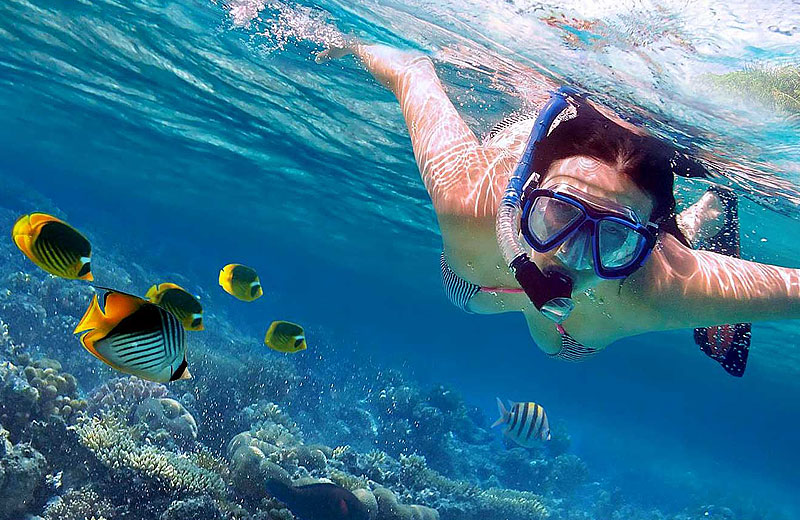
The water here is famous worldwide among divers and snorkelers for its visibility, coral reefs, and marine life.
But even beyond diving, there is something visually calming about the relationship between:
The contrast feels almost unreal.
One direction gives you endless water.
The other gives you endless desert.
And somehow they belong together perfectly.
Few destinations in the world create that visual tension.
Dahab does it effortlessly.
Internationally, Dahab is perhaps best known for the Blue Hole, one of the most famous diving sites in the world, located just north of town.
And while the Blue Hole attracts divers globally, reducing Dahab to diving alone misses the point entirely.
Because Dahab’s appeal is not built around one attraction.
It is built around atmosphere.
Travelers come for:
But often stay because of how the town feels.
Luxury travel often associates quality with complexity.
Dahab disagrees.
Fresh seafood.
Simple breakfasts.
Bedouin tea.
Grilled fish eaten beside the sea.
Meals here rarely feel performative.
And perhaps that is why they feel memorable.
Nothing is trying too hard.
The experience is allowed to exist naturally.
One reason Dahab feels different from many beach destinations is that the landscape never allows you to forget where you are.
The Sinai mountains surround the coastline dramatically.
And unlike tropical destinations where the sea dominates everything visually, Dahab constantly reminds visitors of the desert beyond it.
This creates an unusual feeling:
You are never fully in a beach town.
You are never fully in a desert destination.
You exist between both worlds.
And emotionally, that balance creates something unique.
Many travelers arrive expecting the sea to become the highlight.
Then they experience Sinai at night.
And suddenly everything changes.
Around Dahab and nearby areas, travelers explore:
The silence becomes part of the attraction.
Not empty silence.
Expansive silence.
The kind modern life rarely allows anymore.
And for many visitors, this becomes the most emotional memory of the entire trip.
This may be the most important thing about Dahab.
The town is beautiful.
Not in a polished, artificial way designed by corporations or luxury developers trying to manufacture aesthetics for tourists.
Its beauty happened naturally.
The painted walls, handmade art, colorful cafés, and creative corners scattered across Dahab were not created as marketing projects.
They were created by people who genuinely love the town.
Artists. Travelers. Divers. Free spirits.
And somehow, that love became part of the landscape itself.
Every street feels personal.
Every corner feels alive.
Every view feels accidental in the most beautiful possible way.
And then there is nature itself.
The mountains.
The sea.
The desert light.
The beach mornings.
Dahab constantly creates moments that look extraordinary on camera without feeling staged in real life.
It is incredibly photogenic—but never fake.
And in a travel era increasingly dominated by filters, edits, and carefully manufactured perfection, that kind of honest beauty has become unexpectedly rare.
Modern luxury is no longer only about money.
Increasingly, true luxury means:
peace
space
time
authenticity
emotional freedom
And by that definition, Dahab may be more luxurious than many destinations marketed as luxury destinations themselves.
Because what people are truly searching for now is not necessarily more stimulation.
It is relief from stimulation.
Dahab offers exactly that.
The biggest mistake travelers make with Dahab is treating it like a quick excursion from Sharm El Sheikh.
Because Dahab works differently.
The town reveals itself gradually.
The experience depends on rhythm.
You need enough time to:
slow down
explore
sit by the sea
experience the desert
understand the atmosphere
This is why organized experiences from trusted local companies such as Yalla Sharm make such a difference.
Not because Dahab is complicated.
Because it deserves to be experienced correctly.
With Yalla Sharm, travelers can:
✔ Visit Dahab comfortably from Sharm El Sheikh
✔ Combine Dahab with Blue Hole snorkeling experiences
✔ Explore Colored Canyon adventures
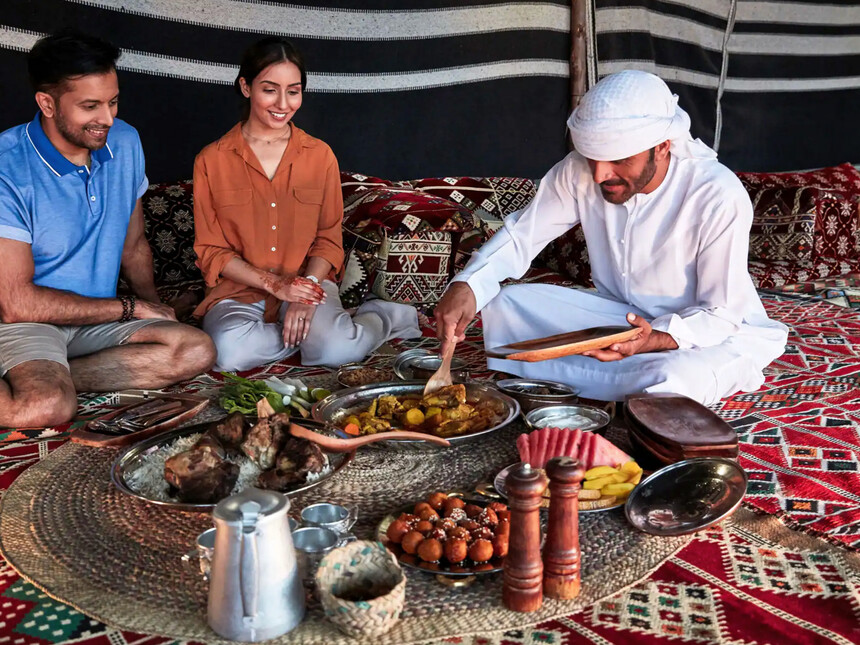
✔ Experience desert safaris and Bedouin dinners
✔ Build balanced Sinai itineraries instead of rushed day trips
✔ Combine sea, mountains, and desert naturally in one journey
And that balance matters.
Because Dahab was never meant to feel like a checklist destination.
It was meant to feel like a pause.
A rare place where travelers stop performing travel…
…and start experiencing it again.
That is why so many people arrive expecting less from Dahab than they expect from other destinations.
And leave loving it more than all of them. 🌊✨
Can You Enjoy Sharm El Sheikh If You Can't Swim? Absolutely — Here's How! 🌊 Imagine arriving in Sharm El Sheikh. The Red Sea is i...
Read MoreCan You Travel Egypt Without a Tour? Independent vs Organized Travel 🇪🇬 Do you need a tour to travel around Egypt? The short answer is: No....
Read MoreEgyptian Hospitality: Why Visitors Are Often Treated Like Guests 🇪🇬🤍 You may come to Egypt expecting the Pyramids. The Nile. Ancient temples...
Read MoreHow to Get Around Egypt: Flights, Trains, Buses, Taxis or Private Transfers? 🚆✈️🚐 Look at Egypt on a map and planning a multi-city holiday can se...
Read More24/7